Atelier Limité was founded on a simple observation: extraordinary artists exist everywhere, yet most will never find a commercial platform for their work. The traditional art market is opaque, inaccessible, and weighted against emerging voices. At the same time, the garment has always been a canvas, personal, visible, daily.
About the brand · Est. Sydney, 2025
What is Atelier Limité?
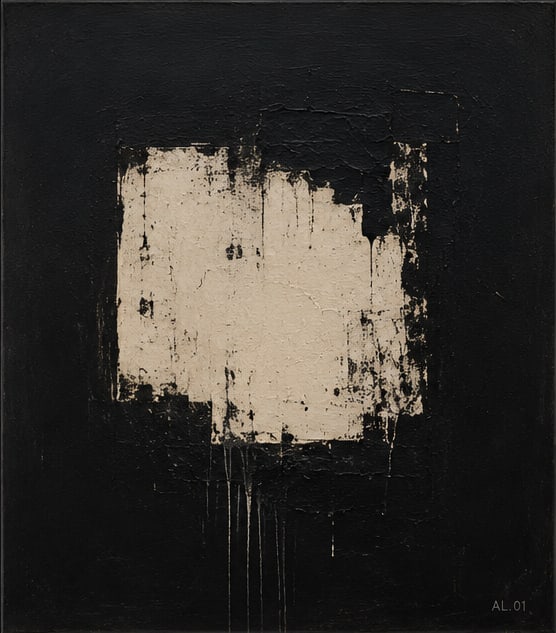
Study 02 · Studio study, artwork in preparation.
Why Atelier Limité was founded
The traditional art market has a structural problem. Extraordinary artists exist everywhere, in studios, in share houses, on residencies, in the margins of careers built to pay rent, yet most will never find a commercial platform for their work. Gallery representation is gatekept, opaque, and weighted toward established names. The result is an art world with enormous talent at its base and no reliable mechanism for that talent to reach people, or generate income.
How an Atelier Limité edition works
Atelier Limité releases four editions per year, scaling as the brand grows. Each edition is a collaboration between the brand and a cohort of artists, painters, sculptors, jewellers, photographers, musicians, theatre artists, First Nations artists, and athletes are all considered. No minimum social media following is required. The constraint is that the work must translate meaningfully to a wearable surface.
Atelier Limité was founded on a simple observation: extraordinary artists exist everywhere, yet most will never find a commercial platform for their work.
The 50/50 model, in detail
The 50/50 net profit split is the structural centre of Atelier Limité. It is not a rounding commitment or a marketing claim, it is the founding principle of the brand, written into every artist agreement from the first edition. Here is exactly how it works.
A platform for artists to be discovered
Atelier Limité is not a print-on-demand service or a merchandise platform. It is an artist discovery platform with garments as the medium. Every edition is a curatorial act: selecting artists whose practice is compelling enough to carry a numbered edition, ensuring their name is front and centre on every piece, and building the collector base and marketing infrastructure to put their work in front of a new audience.
Sustainability, by design, not by claim
Fashion is one of the most polluting industries on earth. The reason is systemic: a model built on volume, speed, and manufactured obsolescence. Overproduction is the industry's primary source of environmental harm, and most sustainability commitments are designed around it without addressing it.
Ethical consumerism, consumption that gives back
The conversation around ethical consumption often ends at material sourcing. Organic cotton, recycled polyester, lower-impact dyes, these are necessary but not sufficient. The deeper question is: who benefits when something is made and sold, and in what proportion?
Before Edition 01 exists
Be on the founding list.
Be first to follow the studies, artist conversations, and future wearable editions.